

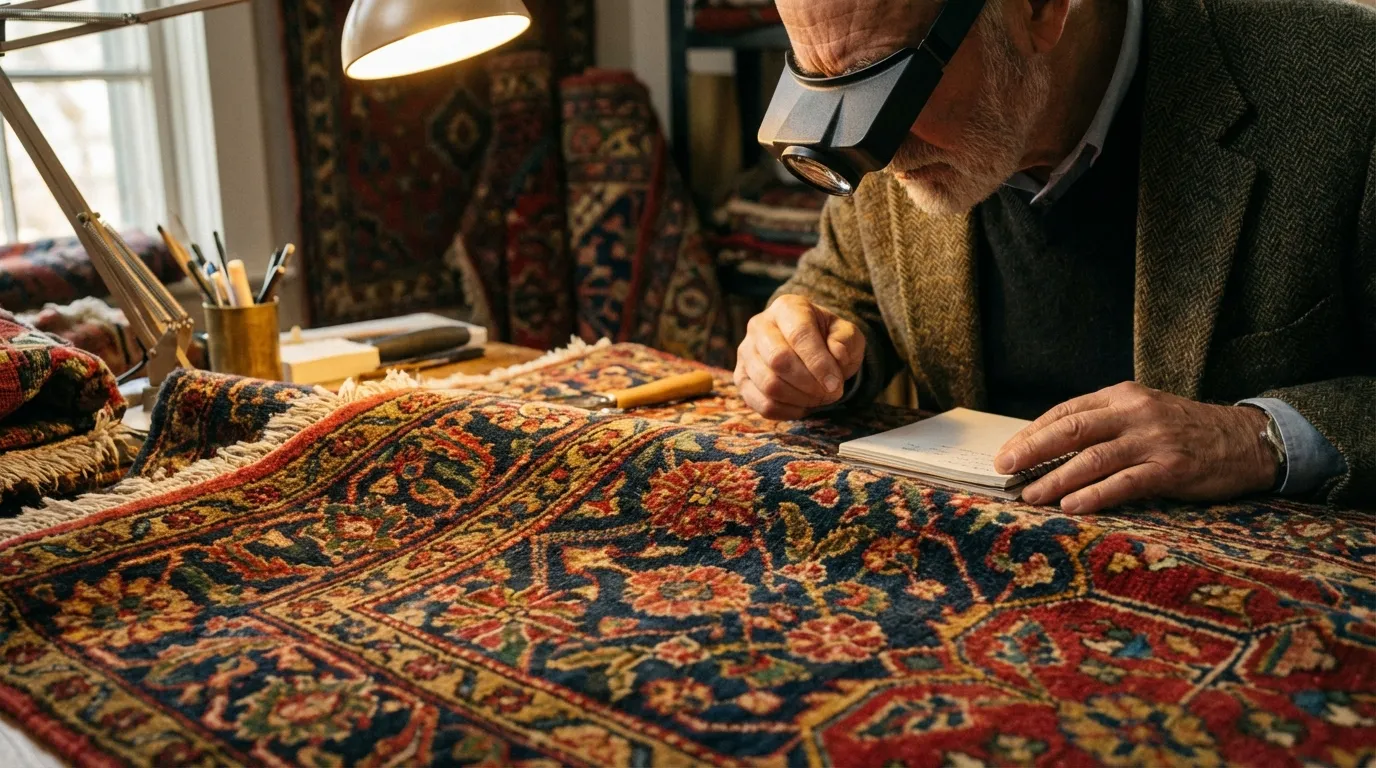
A Complete Guide to Provenance and Value Verification
Authenticating an oriental rug means more than just confirming it’s handmade; it involves tracing its history, identifying the culture that created it, and determining its true worth in today’s market.
For dedicated collectors or homeowners preparing for a deep clean, careful restoration, a sale, or long‑term preservation, often under controlled conditions, knowing its background and understanding rug authentication can be the difference between protecting a valuable investment and making a costly error.
Here you’ll find practical, focused methods, careful fibre and knot checks, and new digital verification tools, so your purchase decisions are based on both informed inspection and solid proof.
Understanding the Risks in Rug Authentication
In the market for oriental rugs, fraud goes beyond fake origin claims; machine-made rugs are often passed off as handmade, with designs that imitate the work of skilled weavers but lack the human craftsmanship in each knot.
Reports show that over 60% of retailers have had to cancel sales after buyers discovered the truth. The financial loss is apparent, but many feel a deeper disappointment at missing out on owning a genuine cultural artifact created over centuries of tradition and careful craftsmanship.
Some counterfeiters are so skilled at copying regional knotting styles that, without close examination, the differences are hard to spot. Many rugs are even “aged” with chemicals to mimic decades of wear.
Auctions can be risky too; misrepresented rugs have sold for tens of thousands more than they’re worth, turning a winning bid into an expensive mistake learned the hard way.
|
Metric
|
Value
|
Source
|
|---|---|---|
| Counterfeit oriental rug market share | 25% | 24MarketReports |
| Retailer returns due to counterfeit | 60%+ | 24MarketReports |
| Blockchain-certified rug trust increases | 40% | 24MarketReports |
Blockchain authentication is quickly becoming a trusted way to track a rug’s history and provide buyers with greater assurance.
Physical Inspection Techniques for Rug Authentication
Careful, direct inspection remains one of the most reliable ways to spot fakes. Experienced collectors, well-acquainted with countless rugs, often notice minor flaws, subtle weaving differences, or unique craftsmanship details that others might miss.
Knot Count and Weave
If you look closely, you’ll often see that hand-knotted rugs have knots that differ a bit, with the weave changing slightly in spots, clear proof of human craftsmanship. These small imperfections usually give warmth and personality, something factory work rarely matches.
By contrast, machine-made rugs keep their knot patterns perfectly even and feature a rigid backing; it’s common to spot bits of glue showing through, revealing their mechanical production.
Material Check
Authentic oriental rugs are typically made from natural fibres such as wool, silk, or cotton, sometimes mixed to create a texture that feels distinctly genuine.
Their colours often come from plant-based dyes, giving a richness that factory dyes rarely achieve. Notice synthetic fibres or chemical colouring? Shades may look overly bright, almost artificial.
Another point to watch: modern dye techniques often strip the weave of its natural warmth, leaving a surface that appears bold but oddly lacking in depth.
Fringe Examination
Azar Sheazadeh from Rug District explains that real fringes are part of the rug’s base, with warp yarns extending past the edge and the weave clearly continuing.
Stitched or glued fringes often show factory production. A good way to check is to look closely, as small construction details usually reveal if the work is traditional.
Back Pattern Inspection
Colours on the back often reflect the front’s layout, though they usually look softer, as if lightly worn over time, a sign frequently linked to true hand-knotting.
If you look closely, you’ll spot minor flaws in the design, slight wobbles or uneven lines that come from a weaver’s hand. Using a magnifying glass, you can see changes in thread thickness and the unique character of each knot, showing the skill worked into every part.
Provenance Documentation and Certification
When judging a rug’s real value, skipping proper documentation often leads to doubt. Certificates from respected rug experts, backed by sharp, close-up photos and detailed written descriptions, remain the most trusted standard.
These should clearly list specifics: the exact village, city, or tribe in Persia; estimated age; fibre type; and precise knot count per square inch. Guesswork rarely survives close examination.
Dedicated collectors combine proof from trusted sources: receipts from reputable dealers, auction listings, complete in-person inspections, expert opinions, and respected experts. Together, they create a documented trail so solid that disputes usually fall apart quickly.
z
For those sourcing overseas, it’s about as close as you can get to being in the workshop and touching the fabric yourself. Dependence on a written description, which can exaggerate or miss significant flaws, is no longer necessary.
Common Mistakes to Avoid When Authenticating
- Accepting the seller’s claim without question, this is rarely enough by itself. You’ll usually need an independent expert to confirm the details, ideally someone with no stake in the sale.
- Missing fibre composition details. Spotting synthetic blends early matters, as they can sharply cut an item’s market value, especially for serious textile collectors.
- Not keeping or checking provenance records, missing dated receipts, certificates, or clear ownership history can make resale harder and raise doubts about authenticity.
- Skipping a careful inspection for wear or changes. Even a minor repair, like a patch woven with noticeably different texture, can point to bigger problems.
Among experienced collectors, ignoring these steps often results in costly errors.
The Role of Professional Appraisers in Rug Authentication
Years of hands-on work with rugs give professional appraisers an advantage that’s tough to match. They’re trained to notice subtle weave changes or faint variations in dye, details most people would miss without deep experience in textiles.
They can often pinpoint a rug’s origin to a specific area, such as recognizing a knot style found only in northern Persia, where even one misplaced thread can reveal its history.
A helpful tool they use is ultraviolet light, which can reveal modern chemical dyes or hidden repairs that are not visible under normal light.
If you’re aiming for serious collectors or respected auction houses, working with these rug experts can boost resale value. Their thorough reports also serve as key insurance records, protecting against fire or water damage.
Keeping in touch with a trusted rug dealer lets you closely monitor market shifts and receive valuable advice when it’s needed most.
Trends Shaping the Future of Rug Authentication
The rug industry is moving toward stricter, more consistent certification standards, though enforcement remains inconsistent across regions. With online rug sales already accounting for about 28% of all purchases, digital provenance tracking is expected to become a standard step before purchase.
Putting Rug Authentication Into Practice
For homeowners and dedicated collectors, keeping a rug’s authenticity confirmed is an ongoing task, not something you check off once. It’s similar to maintaining a classic sports car; you wouldn’t skip a scheduled service if you wanted to keep its value intact.
After any cleaning, repair, or restoration, reviewing documentation and photos helps ensure the rug’s worth stays strong. This often means spotting small changes, such as slight border fading or altered knot tension, before they become expensive problems.
Experts in Oriental and Persian rugs can catch details most people miss, making their knowledge a reliable safeguard.
Combining traditional inspection with modern technology adds extra protection. A practical method is to start with a hands-on appraisal.
Detailed close-up images of the weave, saved in high resolution, are handy. Don’t wait until a sale is imminent to update those files; refresh them whenever the rug changes, especially if insurance or market value updates are expected.
Learn more: Identifying Genuine Persian Rugs - Cleaning & Care Guide
Common Questions
How can I tell if my oriental rug is handmade?
Turn the rug over, you’ll often see the pattern repeated on the back, which usually means it’s hand-knotted. Slight differences in knot size and in the fringes woven into the rug rather than sewn on later also show it’s made by hand.
Natural fibres dyed with plant or mineral dyes tend to have richer, more varied colours than synthetics. Small, uneven details in the design are often intentional marks from the maker, like a painter leaving subtle traces in brushstrokes.
What materials indicate an authentic rug?
Natural fibres like wool, silk, and cotton, or their blends, often show authentic craftsmanship, especially when the surface feels warm and textured. Pair these with plant-based dyes such as rich indigo or earthy madder, and authenticity is likely.
Synthetic fibres often reveal mass production, lacking the depth and, in most cases, lowering the value for those who appreciate handmade quality.
Can I authenticate a rug without professional help?
You can spot some clues if you examine it closely, slight weave flaws, dye shades that fade in ways consistent with age, and wear that looks naturally uneven. Still, for an expensive rug, an experienced appraiser’s opinion is often worth paying for.
When purchasing online, detailed photos are key: ask for sharp, high‑resolution shots of both sides, the fringe, and any unusual labels or stitched marks, as these small elements can sometimes reveal more than the overall pattern.
How necessary is provenance documentation?
Provenance records aren’t just paperwork; they can be the deciding factor that turns a cautious buyer into a confident one, especially for high-value pieces.
When authenticity is in doubt, these records often swing the result your way. A fully traceable history can boost a rug’s price by 20% to 30%, and if the story behind it is rare or remarkable, the increase can be much higher.
They give the buyer solid proof that’s hard to challenge, and that level of certainty often pays off.
We wrote about protecting your investment here: rug moth prevention.