

Cleaning & Care Guide of Persian Rugs
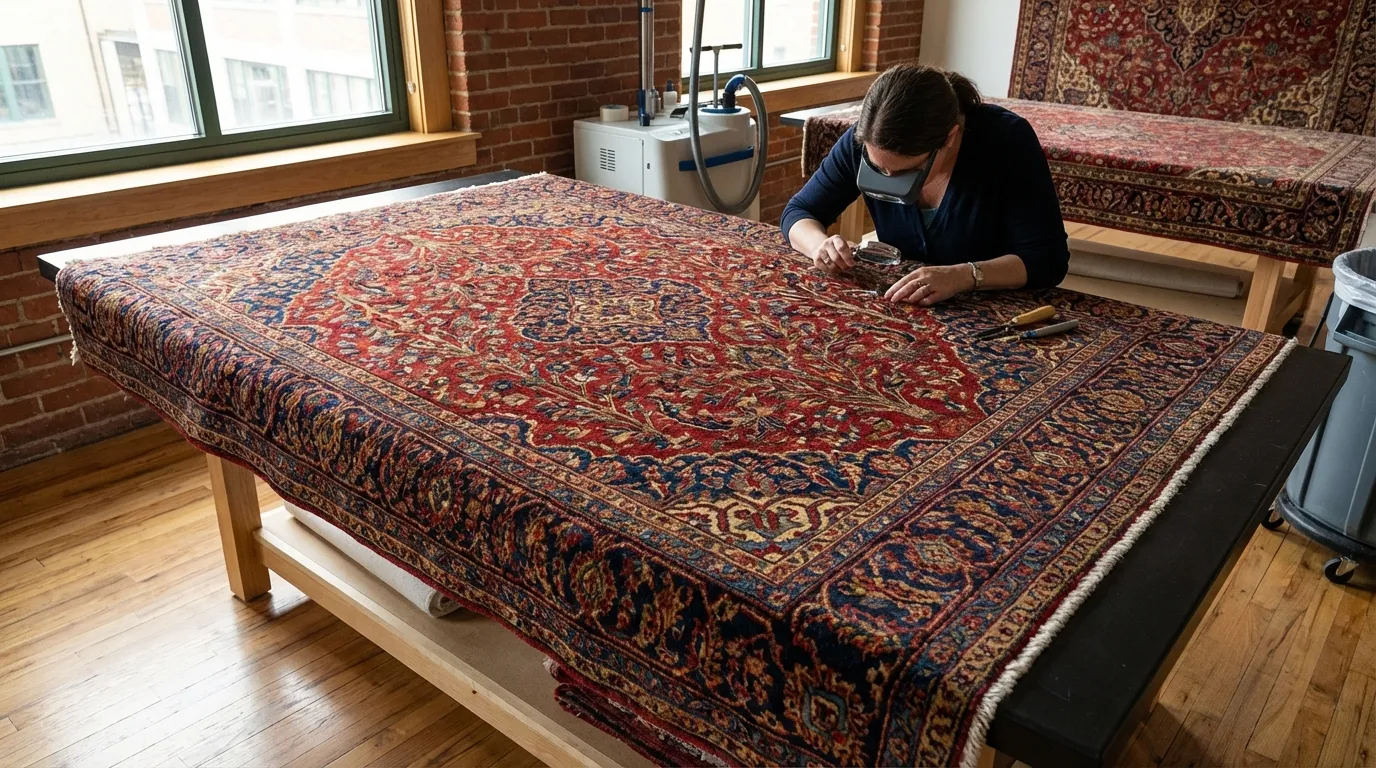
Know your Persian Rugs and Carpets
Persian rugs are more than decorative floor coverings. They often carry deep cultural meaning, show skilled handwork, and can gain real long-term value when cared for properly over many years.
For homeowners and collectors, owning a genuine Persian rug brings pride, along with more responsibility than many people expect. One of the most significant factors is early identification.
It shapes cleaning choices, everyday care, restoration decisions, and even resale later on, such as when working with an auction house or a private buyer.
Knowing how authentic Persian rugs are made, and how they usually change with wear, light, and time, also helps you spot what’s real and what’s not, including small details that are easy to miss. In fact, identifying genuine Persian rugs early can save owners from costly mistakes in cleaning or restoration.
Let's explain how to identify genuine Persian rugs. It looks at construction methods, materials like wool and silk, natural dyes, regional patterns, and signs of age, both obvious and subtle.
It also explains how cleaning and care affect authenticity, helping guide decisions about professional rug cleaning, restoration, or resale planning, with practical examples throughout.
What Defines a Genuine Persian Rug?
A genuine Persian rug is traditionally hand-knotted in Iran (formerly known as Persia). Many rugs made elsewhere copy Persian designs, which can be confusing because looks alone usually don’t tell the whole story.
For me, what defines an actual piece comes down to where it was made, how it was put together, the materials used, and how it ages over time, not just the pattern you notice first. That aging part often matters more than people expect.
From a cleaning and care point of view, Persian rugs act differently from machine-made or imitation rugs, and this becomes clear once you’ve lived with one. They absorb moisture in their own way, react differently to cleaning products, wear down more slowly, and often show their real quality only after years of use. With these rugs, time usually tells the real story.
Key defining elements include:
- Hand-knotting instead of machine weaving
- Natural fibres like wool, silk, or cotton, often mixed
- Regional knotting styles passed down through generations
- Natural dyes that soften and deepen as they age
- Patterns closely tied to local history and culture
Hand-Knotted Build: Why It Usually Feels Real to You
Look at the Back of the Rug
The quickest clue is the rug's back, and it only takes a moment to check. With hand-knotted Persian rugs, you’ll often see knots that aren’t perfectly lined up. The front pattern shows through on the back, just softer and a little uneven, which is a good sign. That uneven look is what many collectors like. Machine-made rugs, by contrast, often have:
- Perfectly even rows
- A mesh or latex backing
- Blurry or printed designs on the back
- A stiff, factory-made feel that doesn’t drape
"Cleaning matters too. Hand-knotted rugs need gentler washing, since harsh machine cleaning can loosen knots or slowly change the rug’s shape over time."
Knot Type Matters
Persian rugs usually use two main knot types, and you can see the difference when you look at them side by side.
- Persian (Senneh) knot is asymmetrical and finer, which helps create tight curves, floral details, and clean borders.
- Turkish (Ghiordes) knot is symmetrical and thicker, so the rug feels heavier and sturdier, something you’ll notice underfoot or when sliding furniture.
Both knot types show up in Persian rugs. Knot density can hint at age and quality; higher density often means finer work, but it also needs more gentle care.
Materials: Wool, Silk, and Cotton in Identifying Genuine Persian Rugs
Wool Quality and Feel
One of the easiest times to notice differences is during cleaning, since that’s when the truth comes out. After washing, real wool usually springs back, keeping its natural shine without getting stiff, and you can often feel it right away.
Most Persian rugs use high-quality wool, often from nearby local flocks. Real wool feels soft and springy, not slick or fake. Lower-quality or imitation rugs often:
- Feel rough or too shiny
- Shed a lot over time
- Lose their texture after cleaning
- Feel flat, even when new
Because of this, experienced rug cleaners can usually tell real wool just by touch, especially when the rug is wet.
Silk Accents and Foundation
Silk appears in Persian rugs in a few ways, sometimes woven throughout, other times as small accents or a soft glint. Real silk usually shows a shifting sheen as light moves and often feels cool to the touch.
When it comes to care, silk needs a gentler hand. The wrong cleaning can weaken fibres or cause dye bleed, which is why identifying it first matters.
Cotton Foundations
Many Persian rugs use cotton for the warp and weft. Compared to synthetic fibres, cotton tends to change with age, slowly relaxing over years of use and often becoming more flexible as the rug ages, as you can feel by hand.
Natural Dyes: Often the Real Colour in Identifying Genuine Persian Rugs
Colour Variations and Abrash
One clear sign of an authentic Persian rug is abrash, the natural colour change you see within a single shade. It happens because artisans dye yarn in small batches, often using plant-based dyes that can shift slightly each time. The result is subtle and easy to miss at first glance.
Abrash isn’t a flaw. Many people look for it because it points to hands-on work and authentic craftsmanship (that’s part of the charm). During cleaning, natural dyes may release a little colour and then settle back. Synthetic dyes are less predictable and can bleed unevenly.
Aging Gracefully Over Time
Natural dyes tend to mellow and soften over time. Over the years, they often form a patina that adds depth and warmth to the rug’s look (that soft glow). This gentle change is something professional cleaners check when judging authenticity. Bad cleaning can strip these dyes (sadly), hurting both appearance and value, leaving a rug looking flat.
Design, Pattern, Colour, and Regional Traits in Identifying Genuine Persian Rugs
Traditional Motifs
Persian rugs use patterns linked to long-running traditions, often shared within local communities. They’re regional and usually shaped by where the rug was woven. Common motifs include (you’ll see these a lot):
- Medallions
- Floral gardens with winding vines
- Herati and boteh patterns
- Tribal geometric designs
That said, design by itself usually can’t prove authenticity; that’s a common trap. It’s often not enough. Uneven details or sloppy pattern work can point to a reproduction, especially when you look closely.
Careful restoration is where problems usually show up first, especially in worn areas or tricky reweaving. Knowing the original design matters because, in genuine Persian rugs, the border and central field often work together to make the piece feel finished; you can usually sense that balance. When borders feel off in size, or the colours clash, it often points to mass production, like a border that overwhelms the field.
Signs of Age, Includes: Patina, Wear and Repairs
Natural Wear vs. Artificial Aging
Authentic antique Persian rugs usually show wear in expected spots, like walkways or along the edges (you can see it). This kind of wear grows slowly over time and feels natural.
Some imitation rugs are made to look old on purpose. Cleaners can often spot this by checking for clear signs.
- Uneven fibre breakdown, inconsistent
- Chemical residues present
- Patchy fading, uneven
- Sharp wear at edges, abrupt
Old Repairs to Persian rugs as clues
Hand-done repairs that use the original materials and methods often point to authenticity and lasting value, especially when the work was slow and done by hand.
By comparison, machine stitching, synthetic patches, glued areas, or quick fixes usually lower authenticity and resale value.
Why Cleaning Reveals Authenticity in Identifying Genuine Persian Rugs
Professional rug cleaning goes beyond looks. Once a rug is thoroughly dusted, washed, dried, and aired in controlled rooms with steady airflow and humidity, its true character shows, often in ways hard to fake, and collectors can spot it.
During cleaning, experts check:
- Fibre strength
- Dye stability when wet
- Knot integrity, including hidden repairs
- Foundation condition
These details decide what the rug really is and what it’s worth for resale or insurance appraisals. For collectors, cleaning is the first step toward a clear dollar value.
Once you know a rug is genuine, I think good care keeps it in better shape and helps protect its value over time. These simple steps usually pay off.
Best Practices for Owners
- Rotating the rug spreads wear more evenly; doing it monthly usually works.
- Light vacuuming helps; you’ll find beater bars often harm the fibres.
- Why risk fading? Keep it out of direct sun; shade works on most days.
- Spills happen; blot right away with a towel and avoid scrubbing.
Importance of Professional Services
Genuine Persian rugs are usually best cleaned by rug experts every few years, depending on foot traffic and pets.
Persian Rug experts trained in restoration, fringe repair, colour correction, and reweaving help keep their value. DIY cleaning may look fine at first, but dye bleed or weak fibres often appear later.
Persian Rug owners concerned about rug pests should review Rug Moth Prevention 2026: How to Prevent and Eliminate Moths.
Knowing your Persian rugs leads to smarter decisions
Determining whether a Persian rug is genuine often requires more than a glance. It comes from getting familiar with the designs, materials, the weave, the dyes, and how the rug changes after years of real use, and that kind of understanding grows over time.
There really aren’t reliable shortcuts. From a cleaning and care point of view, authentic rugs often give themselves away through their texture, knot count, and how the structure reacts when it’s lifted or gently folded, details that trained eyes notice quickly.
For homeowners and collectors, correct identification leads to smarter cleaning decisions, more realistic care plans, timely repairs in damaged areas, and better resale value down the road.
Learning the small signs of authenticity and working with experienced specialists helps protect the rug’s appearance, its story, and its long-term worth.