

Rug Moths can destroy your Persian and Oriental Rugs
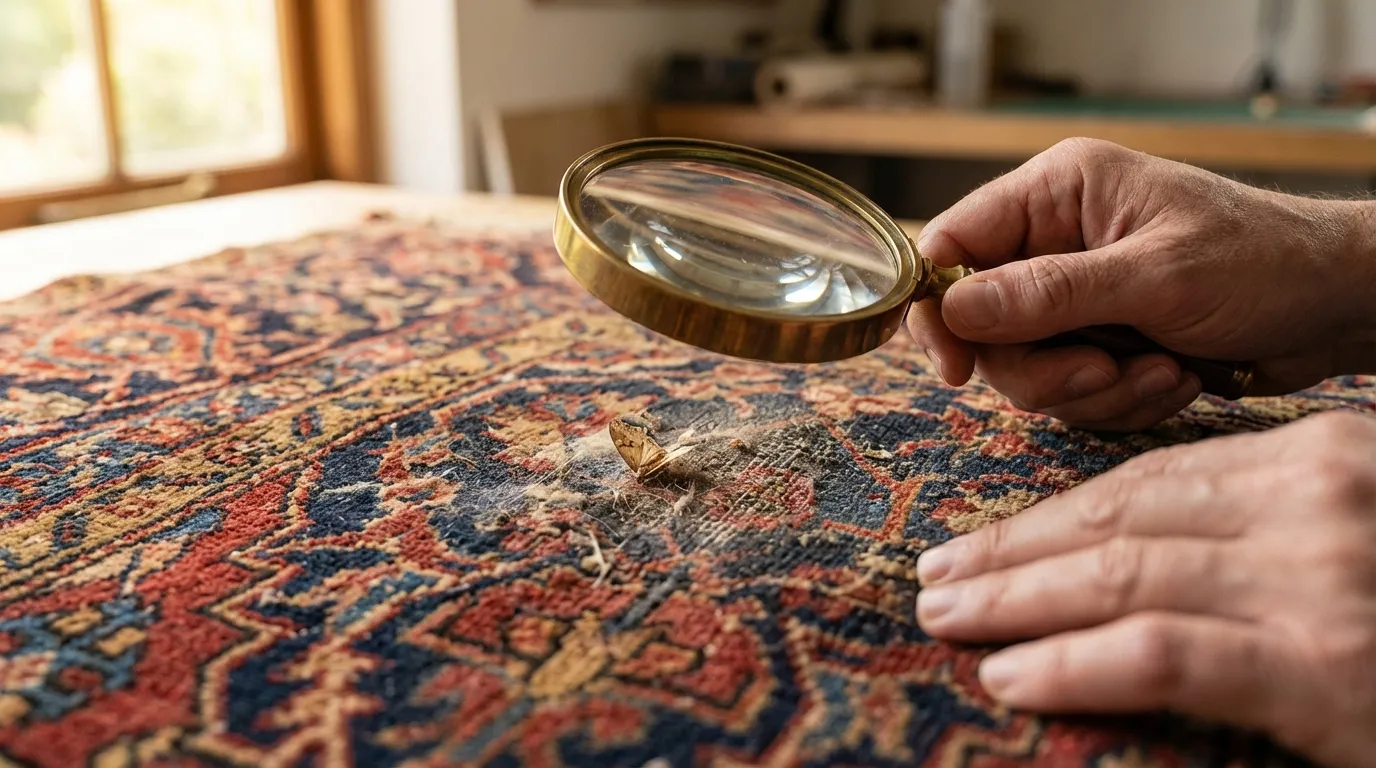
Protect your Oriental rugs from the evil moths!
Owning an Oriental, Persian, antique, or rare collectible rug means treating it as more than simple décor; it’s both an investment and a piece of heritage, crafted art you live with and protect from accidents, like the all-too-common spill of a cup of tea.
The bigger danger often comes from rug moths, whose larvae quietly eat through wool, silk, and other natural fibres, leaving damage that may only be noticed when thin patches or holes appear.
With climate predictions suggesting milder winters in 2026, these insects could remain active for longer than in previous years, making steady rug moth prevention and care even more important.
This straightforward guide to rug moth prevention 2026 explains how to get rid of rug moths and effective ways of protecting wool rugs from insects.
You’ll see why adjusting humidity and temperature can slow their spread, how modern repellents interrupt their breeding cycle, and which removal methods work best.
It includes market updates, real-world examples from seasoned rug owners, and tips from restoration experts who know how to keep these textiles in good condition so they stay part of your life for many years.
Understanding the Rug Moth Threat
Rug moths, especially the webbing clothes moth (Tineola bisselliella), are among the most destructive pests that attack natural fibres. While adult moths may seem harmless, quietly drifting through a room, the real damage comes from their larvae.
These small, cream-coloured caterpillars feed on keratin proteins found in wool, silk, and similar fibres. The Association of Rug Care Specialists reports they can stay active for up to 2.5 years if left undisturbed, more than enough time to cause permanent harm.
They tend to settle in dark, unused spots, under heavy furniture or deep in long-term storage, where normal cleaning rarely reaches. Often, the damage starts underneath the rug, making it hard to spot until it’s already severe.
|
Statistic
|
Value
|
Source
|
|---|---|---|
| Larvae feeding duration | Up to 2.5 years | Master Rug Cleaner |
| Moth repellent efficacy | Up to 3 years | Master Rug Cleaner |
| Vacuuming frequency | Weekly to bi-weekly | Association of Rug Care Specialists |
If larvae keep feeding despite repellents, it’s an explicit sign that action is needed. Addressing the issue early usually avoids the worst damage. Ignore it, and you're likely to face expensive repairs or a total loss.
Large sections of the pile can vanish, exposing the backing and reducing both strength and appearance. Once this happens, complete restoration isn’t possible. For anyone with valuable rugs, prevention is essential, part of regular care, just like maintaining other prized possessions.
The safest way to protect rugs from infestation is with moth-repelling agents containing magnesium silicofluoride, a moth repellent. It does not kill moths, larvae or the eggs. Instead, it makes the wool less appetizing by changing the taste.
Proactive Rug Moth Prevention 2026 Standard
By 2026, the most effective prevention methods will combine trusted care habits passed down through generations with modern, safe solutions that protect fibres without harmful effects.
The Integrated Pest Management (IPM) method has become the standard: it’s methodical, layered, and far beyond the old “clean when it looks dirty” approach.
- Regular vacuuming: Busy spots like hallways and entryways need weekly cleaning, while quieter rooms can be done every other week. Once a month, focus on hidden areas under couches or heavy chairs, where dust, crumbs, and sometimes spiders collect.
- Professional cleaning: Booking a service every one to two years usually stops eggs and larvae before they turn into a costly problem. For example, Oriental Rug Exchange offers specialist cleaning for high-value rugs.
- Repellent treatments: Magnesium silicofluoride sprays can protect for up to three years, or until the rug gets a deep wash.
- Environmental control: Keep humidity low, rotate rugs so all areas get daylight occasionally, limit direct sun for delicate fibres (about 45 minutes daily for wool or silk Chinese rugs), and improve airflow in rarely used corners.
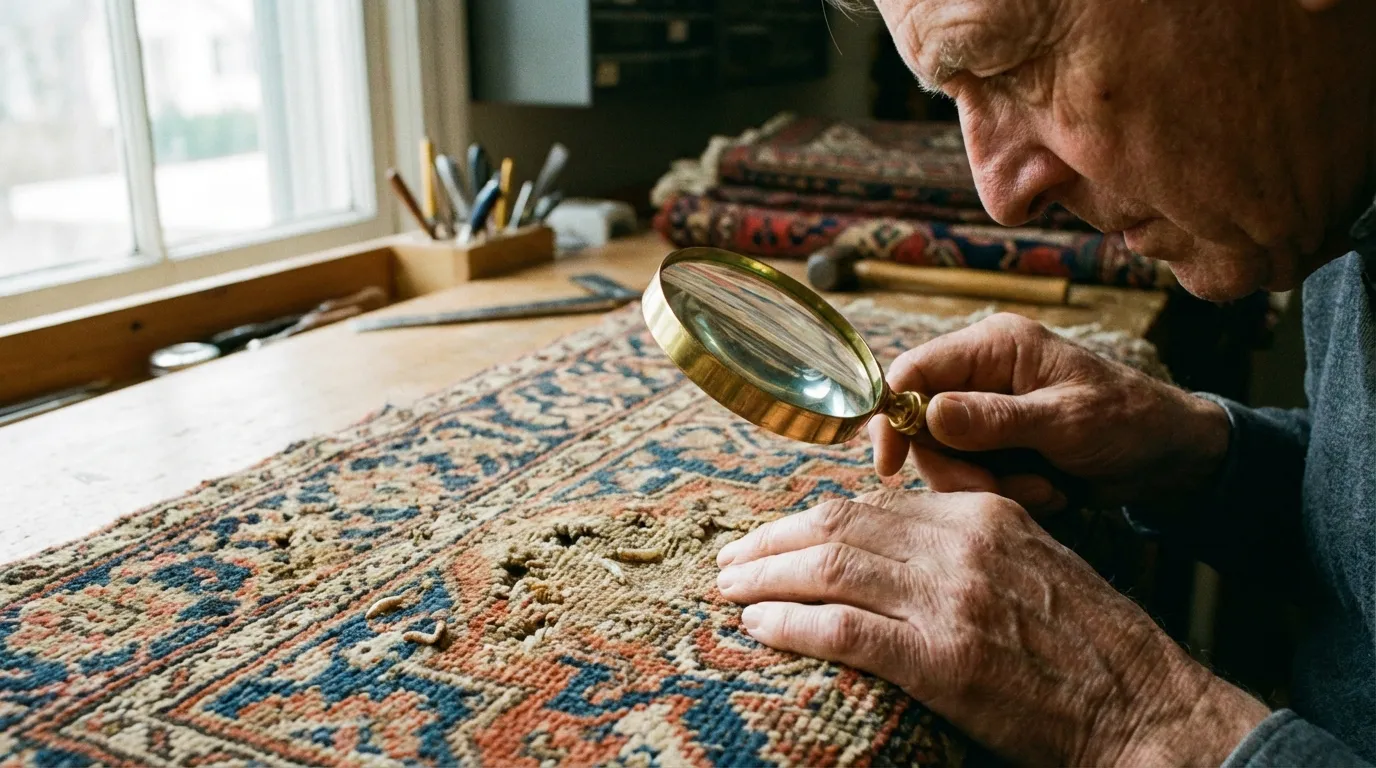
Rug Worx points out that managing sunlight isn’t just for looks; it slows fibre wear and discourages moths. Too much light fades dyes; too little invites pests. Moving rugs seasonally ensures even shaded areas get short exposure to light and fresh air. Pair that with repellents, and your risk of infestation drops sharply, saving both damage and cost.
Eradication: How to Get Rid of Rug Moths
Odd-shaped holes, fine strands of silken webbing, or gritty specks hidden in the fibres usually mean trouble. Rug moths work fast; they can strip a rug bare in weeks, and in a warm, dark corner, the damage can happen even quickly.
That’s why the first step is firm containment.
- Isolate the rug: Move it away from all other fabrics, bedroom carpets, stored blankets, even hallway runners, so the infestation doesn’t spread to new areas.
- Vacuum thoroughly: Clean both sides of the rug and the floor underneath. Eggs and larvae often hide deep in the pile where regular cleaning misses them.
- Freeze treatment: For small rugs, seal in plastic and freeze for seven days, thaw, then repeat. This usually kills any survivors from the first cycle.
- Professional cleaning: High heat or immersion washing can clear every stage of the moth without guesswork.
- Apply repellent: Once clean, use a cedar-based spray or moth-specific formula for ongoing protection.
- Inspect surrounding areas: Check nearby rugs, upholstery, closets, and boxes for early signs before they spread.
Severe infestations need expert help. Our family-run team has rebuilt rugs with nearly half their pile missing, reweaving knot by knot until the colours and patterns match again.
Acting quickly means less damage, lower cost, and a better chance that your rug stays part of your home rather than ends up discarded.
Storage and Seasonal Rug Moth Prevention 2026
Skipping the proper steps before putting a rug into long-term storage can quickly turn it into a moth habitat. Months or years in poor conditions can undo all your previous care.
A smart move is to have the rug professionally cleaned and treated; simple surface dusting rarely removes the larvae that cause most of the damage.
Wrapping in breathable cotton or Tyvek paper works much better than plastic, which traps moisture and can slowly weaken fibres.
Cool, dry spaces with steady airflow are safest; a damp basement corner is basically a feast for pests. The Association of Rug Care Specialists notes that basic preparation often stops almost all infestations.
Checking every few months takes little effort and can prevent costly repairs. If you rotate rugs with the seasons, inspect and treat each one before storage; otherwise, you might lock in a hidden moth colony ready to spread next winter.
You can also explore Oriental Rug Exchange to better understand which materials and weaves require extra care.
Industry Trends and Future Outlook
In rug care, the focus is shifting strongly toward sustainable, non-toxic prevention methods, driven by customers who want to protect their rugs without harming the planet.
The old routine of soaking fibres with strong insecticidal sprays is quickly disappearing. Treatments like magnesium hexafluorosilicate are becoming more common; they work by making rug fibres taste harmful to pests, stopping them from feeding, and often do this without polluting the environment.
Families with young children or pets often choose this option, especially when those hands or paws spend a lot of time on the floor.
A surprising factor is how climate change is changing pest behaviour. Warmer winters in some regions allow moth populations to survive all year, with no seasonal break.
One approach experts expect to grow is using advanced environmental sensors in valuable storage spaces to warn owners when temperature or humidity begins to shift toward moth-friendly conditions.
Picture a collector getting that warning before damage happens; it’s a clear example of how more intelligent monitoring can improve prevention and provide real peace of mind.
Implementing a Year-Round Protection Plan
Rugs that still look impressive years down the line, well past 2026, owe it to a steady care routine, even when life gets busy.
- Professional cleaning once every year or two is the baseline; skip it, and you’ll see the damage in wear.
- A helpful step is applying a protective repellent right after cleaning, making spills and grit much easier to deal with.
- Dust and even pests can hide under heavy furniture, so monthly checks in those spots pay off.
- Rotating rugs several times a year lets sunlight fade them evenly instead of burning one area.
- Pay attention to storage conditions: high humidity or shifting temperatures invite pests.
These methods protect both looks and resale value, whether the rug sees daily use or sits waiting for a buyer. Keep clear records, dates, services, and products, so you can support insurance claims or prove a condition.
Rug care fits naturally into home upkeep, with no tolerance for moths.
The Bottom Line: Protecting Your Rug Legacy
Getting rid of rug moths isn’t usually something you solve once and forget; it’s more like the regular care you’d give a classic car you want to keep in top shape for years.
Steady upkeep, paired with the know-how of experienced rug specialists and modern repellents that genuinely work, can be your best safeguard against expensive repair bills.
After more than fifty years working with fine rugs, saving faded colours, strengthening worn fringes, confirming authenticity, advising on sales, and hunting down rare designs, we know what methods hold up and which ones fail.
A fine rug is far more than decoration; every knot carries the story of its makers. By storing it in stable conditions, keeping it spotless, and repairing damage before it spreads, you help it stay beautiful and strong, ready to be passed down through generations.
Frequently Asked Questions
What are the first signs of rug moth damage?
The earliest hints can be easy to miss, uneven holes and worn patches where the pile appears chewed away. You might spot fine silk strands on the surface, similar to spider webs, but usually thicker. In dark, rarely used areas, small, gritty droppings often gather.
A musty smell may develop, suggesting a long-term problem, and touching certain sections can reveal a thinner, rougher feel, as if the fibres have been gradually eroded.
How often should I have my rug professionally cleaned to prevent moths?
Aim for professional cleaning every one to two years, though your setting may vary. Rugs in damp basements or sunny rooms, both common spots for moths, should be cleaned more often.
High foot traffic, pets, and the buildup of crumbs or hair make yearly cleaning a smart move, removing the organic matter that moths usually target.
Can I use mothballs to protect my rug?
Mothballs often create more trouble than they prevent, mainly because of the strong chemical smell you’ll notice right away. That scent can permanently stick to rug fibres, and greasy buildup is another thorny issue.
A better option is modern pest repellents that work without contaminating your indoor air. These choices usually perform better and avoid stains or lasting odours that spoil the room’s atmosphere.
Will sunlight kill rug moth larvae?
Moths tend to avoid strong sunlight so that brief exposure can drive them away. However, leaving rugs in the sun too long can fade colours and weaken fibres, especially in finer weaves.
For delicate rugs, limit sun exposure to about 45 minutes. Sunlight by itself usually won’t fix the issue; combine it with careful, thorough vacuuming to remove larvae and eggs buried deep in the rug’s fibres.
Is freezing effective for large rugs?
Freezing can work for small rugs; it’s quick and often removes pests effectively. For large rugs, the problem becomes even more pronounced. Thick layers keep the cold near the surface, leaving deeper areas untreated and allowing larvae to live.
Usually, pairing professional rug cleaning with targeted treatments is a more dependable way to handle infestations in oversized rugs.