

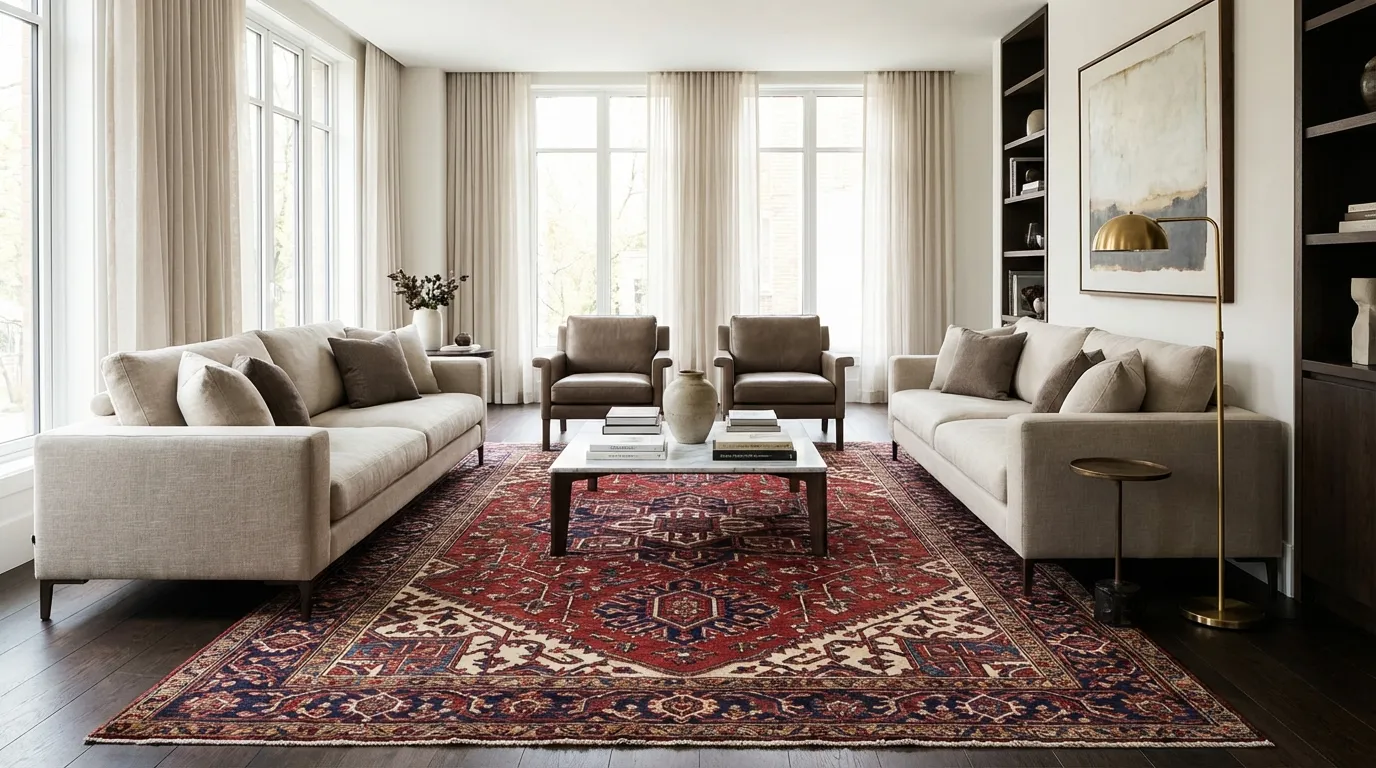
Heriz Rug Trends 2026: A Design Movement You Can't Ignore
Heriz rug styles are seeing a strong return as one of the design trends shaping 2026. Once valued mainly by collectors of Persian and antique rugs, these bold, geometric weavings now attract modern homeowners, interior designers, architects, and long-term investors, perhaps later than many expected.
The appeal goes beyond appearance. Their return matches growing interest in structure, sustainability, and materials that last: dense wool, oversized knots, and patterns that tend to hold their own over time, something experienced buyers often notice.
Let us look at what sets Heriz rugs apart and why owning one today often includes professional care, authentication, and resale planning, and in some cases, a real opportunity.
What Defines a Heriz Rug?
Heriz rugs come from the Heriz area in northwest Iran, near Tabriz, a region known for durable Persian rugs. They are usually woven with a wool pile over a cotton base, which explains why they feel firm underfoot and hold up well to everyday wear. That build makes them a reliable choice.
Most people spot a Heriz rug by its large geometric medallions, stepped center designs, angular floral details, and clear, straight pattern lines. The style is intentional, not soft or decorative, and bold. Instead of the tight curves seen in many city rugs, Heriz designs lean toward architectural shapes that can add more structure to a room.
Colour matters as well. Rich natural dyes are common, especially deep reds, paired with indigo blues, ivory shades, and earthy neutrals. Dense knotting and strong wool help these rugs last for decades, even in busy hallways with constant foot traffic.

Why Heriz Oriental Rugs Are Trending in 2026
Several cultural and design shifts have brought Heriz rugs back into focus this year, with a clear shift toward authenticity rather than mass production.
Homeowners are drawn to pieces that show real history, visible age, and individual character, the kind you notice as soon as you step into a room. Machine-made rugs often fail to create that same sense of presence, and the contrast feels sharper now than it did a few years ago. In many interiors, the difference is easy to see at first glance.
Bold design is also making a return, which helps explain the renewed interest. After a long stretch of pared-back palettes, rooms are leaning toward stronger visual anchors.
Heriz rugs add structure and warmth without taking over a space, especially in larger or open-plan layouts. Their geometric patterns work well with modern furniture, concrete, wood, and industrial finishes, often feeling grounded rather than flashy.
Sustainability is another steady factor. Antique and vintage Heriz rugs are increasingly chosen as long-term alternatives to disposable décor. With proper care, they often remain in use for generations, reducing waste while keeping traditional craftsmanship active rather than letting it fade.

The Appeal of Heriz Rugs for Modern Homeowners
Designers often point to how a Heriz rug can ground contemporary spaces. In minimalist interiors, they add warmth and texture without making the room feel busy. In more eclectic homes, they help connect furniture from different eras or materials, wood, metal, and leather, so the space feels planned rather than thrown together.
That kind of flexibility also matters to homeowners. Built with a thick wool pile and solid construction, Heriz rugs work well in living rooms, dining areas, home offices, and hallways, especially near entryways and dining tables where foot traffic rarely lets up (you know the spots). Made for daily use, they tend to age well. Colours soften over time, often adding depth and variation instead of fading or losing character.
As more people notice this, demand for new Heriz-style rugs has grown, along with renewed interest in antique and vintage pieces. Their visible craftsmanship, natural wear, and long-term durability explain why they still make sense under a busy dining table or in a frequently used entry hall.
Growing Interest of Heriz Antique Rugs Among Collectors
Collectors of Persian and antique rugs have long respected Heriz Antique rugs for their craftsmanship and durability, qualities that usually become clear after decades of use, not in a showroom.
What has changed in 2026 is how widely the market sees their investment value. High-quality Heriz Oriental rugs, especially late 19th- and early 20th-century pieces, are drawing stronger interest as supply tightens and demand remains steady.
Market trends show a clear pattern: rugs with solid provenance, natural dyes, good condition, and stable weave structure tend to sell for higher prices.
Authenticity and origin now matter more than ever, and buyers scrutinize restoration work, especially when it affects the rug’s structure. As prices rise, proper authentication and documentation are now practical necessities. For more on this, see our detailed guide on how to authenticate an oriental rug.
This renewed attention is also leading to more resale activity at auctions. Owners who have held Heriz Oriental rugs for decades are reassessing their pieces and often finding that past cleaning or restoration decisions affect value. Preparation matters, especially for older rugs.

The Role of Professional Cleaning and Care of Heriz Persian Rugs
As Heriz rugs grow in popularity, proper maintenance often matters more than many owners expect. These rugs are known for durability, but the wrong cleaning methods can still cause permanent damage, which catches many people off guard.
Harsh chemicals, poor drying, heavy scrubbing, and too much moisture can strip natural dyes and weaken wool fibres over time. These risks are real, and in my view, they’re often overlooked until fading or texture loss becomes obvious.
Professional rug cleaning services stand out because they understand Persian and Oriental rugs. They use gentle, dye-safe washing methods that protect colour while removing dirt that slowly breaks fibres down.
For homeowners, the biggest improvement is often noticeable within a year or two. Collectors benefit from scheduled care as well, since records matter during appraisals or insurance updates, where a clear cleaning history can add trust and value. You can learn more about common cleaning mistakes that reduce value.
Restoration: Preserving Value and Beauty of Heriz Rugs
Among older Heriz antique rugs, restoration remains in steady demand because time on the market brings predictable issues, such as fringe wear, edge damage, thinning pile, or moth holes or poor storage.
Left alone, these problems spread and can quickly reduce value, especially when small flaws become structural. Even minor damage matters if the rug may be kept or sold. For moth prevention tips, see rug moth prevention 2026.
Expert restoration keeps the piece true to its origins while restoring strength. Artisans match wool, dyes, knotting methods, and yarn structure so repairs blend in rather than stand out.
With antique Heriz rugs, restoration often determines whether a piece remains a usable heirloom or slips into fragility, a process still done by hand. By 2026, this care is considered conservation, such as stabilizing a worn edge before a hole forms.
Authentication in a Competitive Market
The growing demand for these Persian Rugs has led to misattribution, and reproductions are often sold as authentic, which can catch buyers off guard. These mistakes are often costly.
As a result, authentication is a service for buyers and sellers seeking clarity before a purchase or sale. Specialists assess knot structure, wool quality, dyes, design details, and regional markers to judge age and origin, things you usually cannot spot at a glance.
Verified authentication services provide peace of mind and help protect value. Collectors gain documented provenance that supports resale. Homeowners may authenticate a rug before listing, since buyer confidence often rises, and pricing can change before a transaction.
Resale and Long-Term Value
In 2026, the resale market for Heriz rugs is stronger than it has been in years, often exceeding many owners' expectations. Demand closely follows design trends, and Heriz pieces fit modern and transitional interiors; they appear in both living rooms and offices.
Buyers are informed and selective, with clear expectations around quality, care, and long-term handling, and they recognize good work when they see it.
Rugs that were professionally cleaned, restored when needed, documented, and stored in climate-controlled spaces tend to sell for more than neglected pieces, something many owners miss.
Whether selling privately or through a professional service, results still depend on presentation and condition, such as a well-maintained Heriz photographed and listed with restoration records.
Why This Trend Isn’t Going Away
What’s most noticeable is how well Heriz rugs keep their place as interiors change over time. That flexibility, often paired with long-standing cultural value, tends to be their quiet advantage.
The renewed interest isn’t a short-lived fashion moment or passing phase (that’s fairly clear by now). It points to a wider shift toward authenticity and sustainability, especially in living and dining spaces.
These rugs connect with a wide range of people, from seasoned collectors to newer buyers still shaping their taste. Made for high-traffic areas, a Heriz rug in an entryway or family room shows why durability and warmth still matter.

Final Thoughts
What stands out most in 2026 is how Heriz rugs are valued differently. Collectors often see them as steady assets with room to grow as the market changes, while homeowners tend to treat them as a bold design anchor that works well in a main living space.
This renewed interest shows respect for craftsmanship, history, and durability, not just short-lived trends, and it comes across as a quiet shift instead of a loud comeback.
Since these rugs are used every day by kids and pets, cleaning, restoration, authentication, and resale services matter more over time, especially when planning an estate or selling during a clear market upswing.