

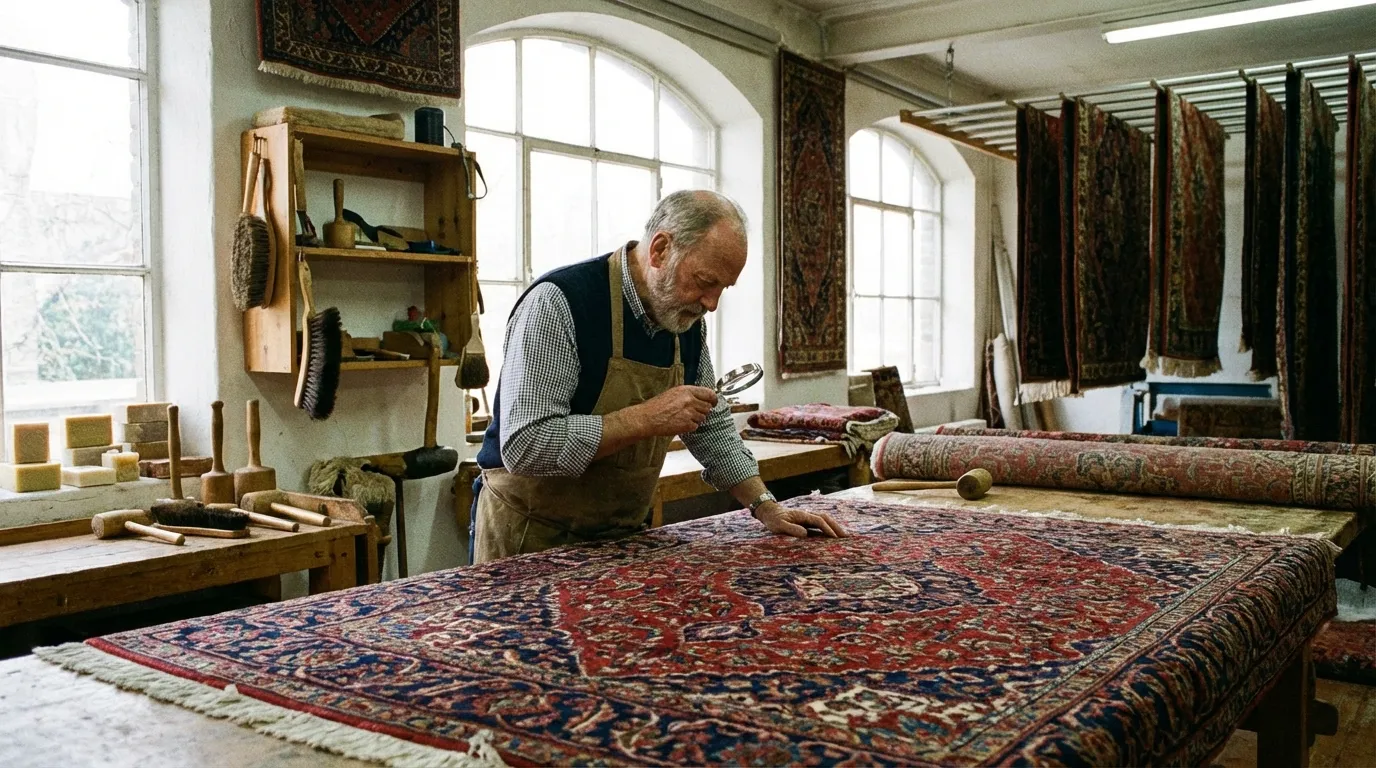
Only give your Oriental Rugs the best rug care.
Oriental, Persian, antique, and tribal rugs are more than decorative floor coverings. They carry cultural meaning, real financial value, and often stay in families for decades as personal heirlooms (the kind you probably remember seeing as a kid).
They aren’t just decor. With the proper care, a well-made rug can often last for generations, but poor handling can do the opposite. Delicate fibres can weaken, dyes may fade, and the structure itself can suffer, which usually lowers its value.
The stakes are real. For homeowners and collectors like you, choosing the right rug cleaning service isn’t something to rush, and it’s usually not worth the gamble.
This guide explains how to choose a professional rug cleaner and the questions collectors should ask before handing over a rug to any service provider.
It applies to routine rug cleaning, restoration work, authentication needs, or getting a piece ready for resale, often before an estate sale or appraisal.
There’s no sales talk here. The focus stays on practical, confident choices you can actually use, like knowing what to ask before a valuable rug ever leaves your home.
Why Choosing the Right Rug Cleaning Services Matters
Permanent damage is usually what worries people most, and with handmade rugs, that concern makes sense. These are detailed textiles, with a lot going on beneath the surface.
Many use natural dyes, hand-spun wool, touches of silk, or a delicate cotton base that doesn’t hold up to stress (this is often overlooked).
Antique rugs may also carry real historical and resale value. The tricky part is that many are made with weaving methods you don’t see today, which standard carpet cleaners often don’t understand.
Improper cleaning can lead to:
- Colour bleeding or dye movement
- Shrinkage, or a warped base that never fully settles
- Fibres that weaken over time or snap
- Loss of patina and market value
- Stains pushed deeper instead of being lifted
A qualified rug cleaner treats each rug as its own job. That usually means careful dye testing, checking fibre strength, and adjusting water use, movement, and drying time.
You can’t rush this. Small choices during washing and drying matter most, like slowly air-drying an old wool rug instead of blasting it with heat.
Question 1: What Experience Do You Have With Handmade Persian and Oriental Rugs?
The biggest issue here is risk: older, fragile rugs can be damaged quickly by the wrong method. Time in business helps, but steady, hands-on work with handmade rugs often matters more, the daily, unglamorous handling.
Most collectors want someone who regularly works with Oriental or Persian rugs, not just wall‑to‑wall carpet. It’s fair to ask direct questions, especially when a rug has age or weak fibres, which is common.
Key things to ask:
- Ask if they clean older Oriental or Persian rugs (50+ years) regularly.
- How many rugs like yours go through the shop each year?
- Ask about training beyond basic carpet cleaning, like courses or apprenticeships.
- Can they clearly explain how fibres or weaving styles change the cleaning process?
Some services focus on synthetic carpets, and that can leave gaps. The right pro can clearly explain origins and materials, like why a natural dye might bleed if handled wrong.
Question 2: How Do You Identify and Test Dyes Before Cleaning?
Dye bleeding is one of the most significant risks in rug cleaning, especially with older rugs. This comes up often because many older pieces use natural dyes, which can react in unexpected ways once water or cleaning solutions are used.
That’s why testing usually matters more than people expect, and it should happen before any full washing starts.
Rather than a checklist-style answer, the cleaner should walk you through the process. You’ll want to know where testing is done, how colorfastness is checked, and when it happens. What do they do if dyes seem unstable? Do they test every rug or only certain ones?
A trustworthy cleaner won’t rely on a quick look. They should explain fundamental changes, like using less moisture or switching to a different solution for a wool rug with delicate reds, rather than cleaning every rug the same way.
Question 3: Is Cleaning Done In-Plant or In-Home?
One of the most significant differences usually comes down to where the rug is cleaned, and that matters more than many people think.
Before choosing, it helps to slow down and look at a few real-world details. Some companies clean rugs in a dedicated facility, while others work on valuable pieces inside a customer’s home, which can be risky.
Think about the equipment being used, and also how the rug is dried. Drying is often overlooked. In my view, high-quality rug cleaning is usually done in-plant because temperature, airflow, and timing are controlled.
In-home cleaning can work for machine-made rugs, but a handmade rug that has been dried correctly in a controlled environment is much safer.
For more on why rug cleaning facilities matter:
Oriental Rug Cleaning: Steam Cleaning Risks & Safer Options.
Question 4: What Cleaning Methods Do You Use?
What collectors and homeowners often notice is how the rug cleaner talks through the process. It should feel careful and precise, not like a sales pitch. The small details usually tell the real story, and they really matter here.
Before any washing, expert rug cleaners usually explain dust removal as a separate step. It’s easy to skip, but dry dirt causes most long-term damage by slowly grinding into the pile.
The washing method, by hand, machine, or both, should fit the rug. The same goes for gentle, rug-safe solutions and controlled drying so the fibres aren’t stressed.
Question 5: How Do You Handle Repairs and Restoration?
Many rugs need minor fixes or light stabilization before or after cleaning. That’s normal and often unexpected. These decisions can shape how long a rug lasts and its long-term value, sometimes even more than the cleaning itself.
A helpful step is to ask a few clear questions. Do they do repair and restoration in-house, or send the work out? Hand repairs often matter, so ask how fibres and weaving are matched, especially on older rugs.
Also, ask about any follow-up or guarantee that comes with the work.
Question 6: Can You Provide Authentication or Condition Reports?
Collectors planning resale, insurance, or estate work often need formal paperwork, often sooner than they expect. Asking early helps cut last‑minute stress. It helps to ask if a service can provide:
- origin, materials, age
- condition reports
- repair or damage notes
- insurer/buyer summaries
Some cleaners skip authentication. Experienced rug specialists often share informed opinions or work with appraisers, and that usually works.
Question 7: What Insurance and Liability Coverage Do You Carry?
What matters most is how open the company is when surprises happen. Precise liability details often make the choice easier. Look at what’s covered:
- Is the company insured for customer rugs during cleaning and transport?
- If damage happens, how is it handled, and who is the contact?
- High-value rugs may need different coverage, so ask for details.
Services that avoid these answers can leave the risk on you, especially.
Question 8: How Are Rugs Tracked and Stored While in Your Care?
Mix-ups usually don’t happen when a cleaner uses a simple, visible system. They should be able to explain it clearly, no mystery. Why guess? It’s smart to ask upfront because storage details matter. For example, a clearly tagged rug is placed on a rack in a dry room.
Ask about:
- Tagging or labelling is used for tracking (barcodes or handwritten tags that match the paperwork)
- Storage location and climate control, like racks in a dry room instead of stacked
- Pest protection steps, bugs happen (sadly), so prevention matters
- Moisture protection, with rugs kept off the floor at all times
Question 9: What Is Your Pricing Structure for Rug Cleaning Services?
Cost matters, but it shouldn’t be the only thing you look at when checking pricing; it’s an easy trap. I find it smarter to start with the details that shape the final bill: how prices are set (by size or material), whether inspections and estimates are included, if restoration or treatments add extra fees, and when payment is due. Why be careful with unusually low prices? They often point to shortcuts or a lack of experience.
Question 10: Can You Provide References or Examples of Past Work?
Reputation matters in the rug world, and it usually shows through real hands-on work, not big claims. Trust grows when you can see clear proof, so real examples matter more than promises here.
What should you look for?
- References you can actually contact, like collectors or long-term clients
- Before-and-after photos of similar rugs, since patterns and damage can vary
- Short notes from antique owners with details on the repairs done
Red Flags to Watch For in Rug Cleaning Services
Pressure tactics are often the first clue. When the right questions come up, warning signs tend to show if you slow down and listen, and that uneasy feeling usually connects to small details.
- Guarantees ignore rug age/condition
- Refusal to inspect rugs before quoting
- Unclear cleaning explanations (hard to tell what they do)
- Pressure to proceed without paperwork
- Pricing seems unclear, then shifts with extra fees
Final Thoughts: How to Protect Value Through Informed Decisions
Trust often starts at drop-off or pickup, when a cleaner explains what they’re doing and why it matters. When it comes to rug cleaning, choosing the right hands for the job usually comes down to selecting the right workroom: a dedicated wash floor, not a back-alley sink.
This isn’t just any service. You’re protecting history, craftsmanship, durability, and long-term value, especially with Oriental, Persian, antique, or heirloom rugs. Asking clear questions about dye testing, drying racks, and repairs often shows responsible ownership and genuine care.
When owners understand a cleaner’s experience and methods, they can make confident choices that keep rugs in good shape for years, mainly when delicate dyes are involved, and each step is explained in plain language.
You can also learn more about provenance in
How to Authenticate an Oriental Rug: A Complete Guide to Provenance and Value Verification.