

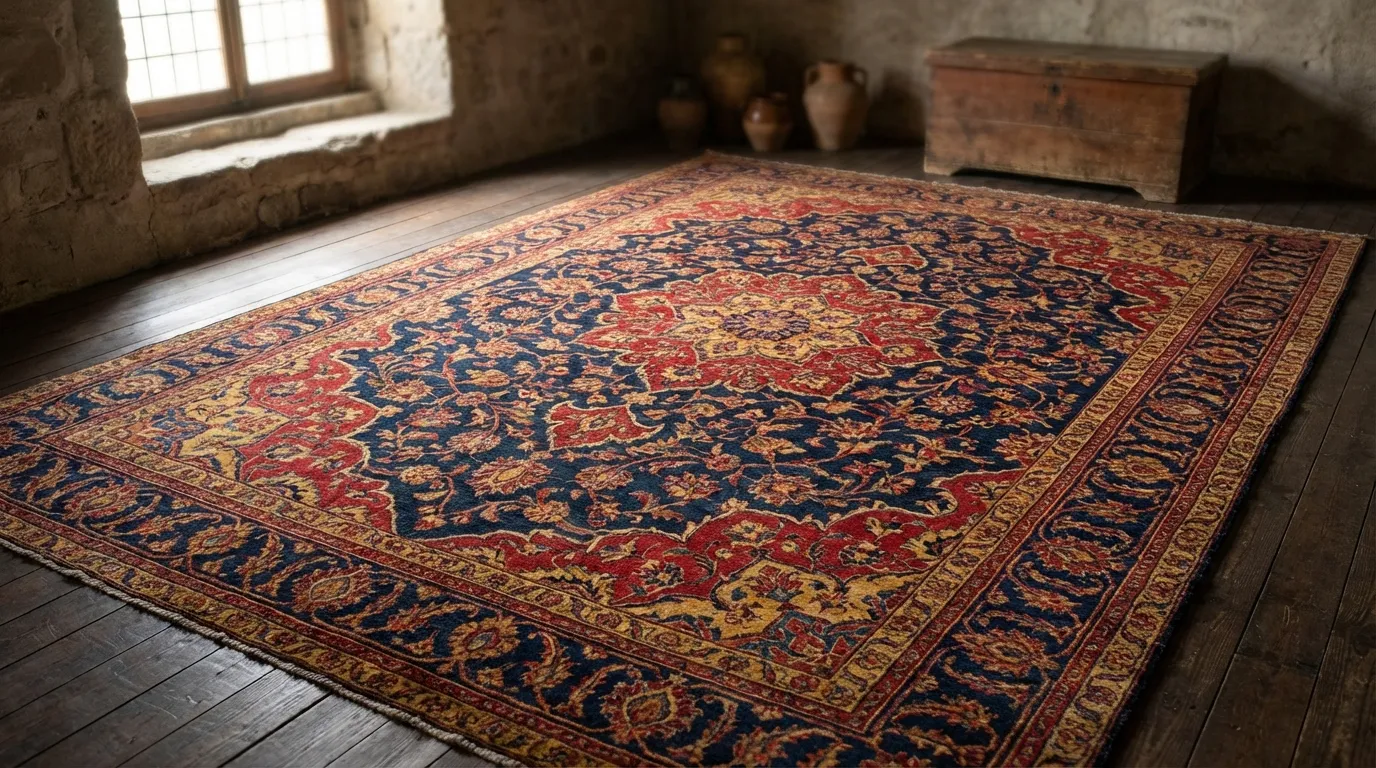
Oriental rugs and the stories they tell.
Oriental rugs are more than attractive floor coverings; they often carry history right into the room, not just decoration. They work like woven records, passing memory from one generation to the next. Each knot can reflect personal and community identity, and you can sometimes trace where and by whom it was made.
For homeowners and collectors, understanding the cultural significance of oriental rugs often enriches their ownership experience. It explains why specific colours, borders, or layouts appear. In my view, that background can also help protect long-term value by leading to smarter choices about care, storage, and appraisal.
Many people inherit a rug or choose one simply because it feels special, even if they can’t explain why. That reaction is typical. The reason is often hidden in symbols, colour choices, and repeating patterns that aren’t obvious at first glance.
These details connect to faith, family stories, local customs, and the places where the rugs were made, whether mountains, deserts, or villages. Those same elements guide professionals when cleaning, restoring, and evaluating a rug without damaging it.
Let us examine rug symbolism, Persian rug patterns, and the heritage behind these pieces, and how those ideas still appear today, sometimes quietly.
We'll cover rugs as cultural records, how designs changed over time, and how to start spotting common motifs. It takes practice, and that’s fine. The goal is to see rugs as history you can live with, learn from, and care for year after year.
Rugs as Cultural Records, Not Just Decor
Long before rugs were treated as styling pieces, they often carried meaning far beyond warming a floor. In many regions, oriental rugs worked as personal and cultural records, which is pretty amazing when you think about the setting they came from.
Where writing was rare or not part of daily life, woven patterns worked like a shared memory system. According to Encyclopedia Britannica, rug makers used specific motifs and colour choices to convey religious ideas, local scenery, tribal identity, and even family history. This kind of storytelling happened quietly, thread by thread, and that’s likely why old rugs still feel expressive rather than stiff or frozen in time.
The oldest known pile rug, the Pazyryk Rug, dates back to the 5th century BCE. Found frozen inside a burial mound and now kept at the Hermitage Museum (not a bad retirement), it proves that weaving was already a complex, highly skilled craft more than 2,500 years ago, long before modern design trends entered the picture.
Most rugs came from four main settings: nomadic tents, village homes, urban workshops, and royal courts. That setting often shaped the design in clear ways.
Nomadic rugs usually use bold, repeatable symbols that worked well on the move, while court rugs lean toward fine detail and strict symmetry.
These details help experts place a rug in time and location, and they often guide how it should be cleaned or repaired.
Looking at rugs as cultural records can help avoid expensive mistakes. Harsh cleaning can strip natural dyes, and heavy restoration can erase wear patterns collectors care about. In many cases, a softened border or uneven colour is exactly what tells the rug’s story.
Understanding Rug Symbolism and Pattern Language
Rug symbolism works a lot like a shared visual language that grows through hands-on practice instead of formal teaching. Weavers usually learned by watching parents or relatives at the loom, copying movements and patterns rather than reading instructions (since written guides didn’t exist).
While styles vary from place to place, many symbols recur across the world of oriental rugs. They’re passed down visually, generation after generation.
Because so much depended on memory and routine, even small changes in shape, colour, or spacing can mean more than people expect, and collectors often watch those details closely.
Some symbols show up especially often. The Tree of Life, for example, usually symbolizes immortality and the connection between earth and heaven.
Medallions, often set in the center, usually represent the universe or a spiritual focal point.
Garden layouts known as Chahar Bagh suggest paradise and balance, usually arranged in clear quadrants, simple at first glance, but layered with meaning.
Prayer niche designs, called mihrab, appear most often in rugs made for personal devotion or daily prayer.
Animals add another layer of meaning. Lions often signal power or protection, while birds usually point to the soul or freedom, depending on context. The boteh (later called paisley) is tied to growth and continuity. The Herati, or fish pattern, is often linked to abundance and protection.
Pattern meaning becomes clearer when you look at consistency. Tight, balanced repetition often points to workshop or court production. Irregular spacing or playful shifts in scale usually suggest village or tribal weaving, more personal and less rule-bound.
Regional Traditions Shape Design and Meaning
Every rug carries its hometown with it, often more than people expect once they start looking closely.
Persian rugs from places like Tabriz or Isfahan usually have tight knots and dense floral detail, made for settled homes and royal rooms where polish mattered (think formal salons, not tents). They weren’t rushed, and that care often shows as the rug ages.
Tribal rugs from Qashqai or Kurdish regions feel different right away, shaped by travel, memory, and daily life on the move (loom packed up, moved, set up again). That rhythm makes them more instinctive, more personal, and often more expressive.
Caucasian rugs lean into bold geometry and intense colours, using patterns simple enough to remember without sketches, which helps when weaving from memory.
Anatolian rugs often include prayer niches, pointing to how faith fit into everyday routines, likely tied to daily prayer times.
Central Asian rugs, especially Turkmen pieces, repeat gul motifs that signal tribal identity at a glance.
Baluchi rugs add another layer, often darker, practical, and made for real use as much as beauty.
Collectors sometimes see irregularity as damage, but it’s usually intentional. These shifts show the weaver’s hand and the loom’s limits (no factory perfection here). Rug historians often say these traits raise authenticity and appeal. Not flaws, signatures.
Regional knowledge matters in restoration, too. Using the wrong wool or dye can quietly break cultural continuity and hurt value. Skilled restoration respects original materials and methods, such as matching a Turkmen red to its original dye rather than a modern substitute.
Why the Cultural Significance of Oriental Rugs Protects Value Over Time
Cultural understanding can have a real financial impact well beyond the classroom, as seen with antique rugs. With proper care, many last over 200 years, which matters most for people who think long term.
When cleaning or repairs go wrong, value can drop faster than expected, often in quiet ways that are easy to miss. That kind of loss is understandably frustrating for owners.
One helpful way to look at this is through common care mistakes. Harsh chemicals can strip natural dyes from the fibres, something that happens more often than many owners realize.
Machine washing may slowly weaken hand‑spun wool, while prolonged exposure to sunlight usually fades colours tied to a specific weaver or region. The damage can be subtle, but it builds over time.
What’s interesting is that market data still shows steady demand. Reports from 24 Market Reports place the global oriental rug market above $1.15 billion, with growth strongest among collectors. Buyers often care more about the story and origin when details are well documented, such as photos and notes.
That same cultural knowledge also helps during resale or estate planning. Clear symbolism and documented origins often support higher valuations, in my view, and make it easier to work with dealers, such as Oriental Rug Exchange, who truly understand the market.
Caring for Rugs as Living Heritage
When a rug is treated as living heritage, care often looks a little different. Instead of just cleaning, it’s about looking after something with real history, usually decades old.
Regular vacuuming still helps, but deep cleaning is usually safest when done by professionals who know the exact fibre type, the dyes used, and the rug’s age and condition. That kind of know-how often avoids minor damage that doesn’t show up right away, which is especially common with older pieces.
Moth prevention is another big concern, and it can be easy to miss. Moths love wool and silk and usually attack from the back, so damage may stay hidden until it’s already serious.
Regular inspections and smart storage can really help, even simple habits like flipping the rug from time to time. Btw, we covered this here: Rug Moth Prevention 2026: How to Prevent and Eliminate Moths.
Sustainability matters too, and often even more in this setting. Traditional rugs used natural dyes and renewable fibres meant to last, not for convenience. Care methods that respect those materials tend to keep colour, texture, and structure looking right.
Working with professionals who understand cultural context also helps. Small details add up, especially if the rug is kept long-term, passed down, or sold later.
Why the Cultural Significance of Oriental Rugs Still Matters Today
Oriental rugs link the past and present in a very real, hands-on way. It may sound simple, but these pieces carry human touch, belief, skill, and patience across centuries, passed quietly from one set of hands to the next (which is pretty amazing when you stop and think about it).
In a world that relies heavily on mass-produced goods from large factories overseas, rugs woven by hand in specific villages or regions often feel more personal. You can usually sense that someone actually sat there, worked through the process, and made them with care.
That background changes how people connect with a rug. Homeowners often feel more pride and confidence once they know the story behind it (you really do see it differently on the floor), and that slight shift tends to show up in everyday life.
Collectors use these stories to make better choices about age or origin. Families rely on them to keep cultural roots alive. Designers look for real character, like specific motifs, patterns, or natural dyes. When the meaning is clear, owning a rug often feels less like a purchase and more like taking care of something meaningful.
Caring for a rug with its story in mind means protecting more than just fibres (not only wool and knots). You’re also preserving identity and history, at least in my view.
Skilled rug professionals matter here. Beyond cleaning spills or repairing edges, they help protect symbols, regional styles, and meaning so the rug can be used, walked on, and enjoyed by the next generation.
Common Questions, Explained
What makes oriental rugs culturally significant?
So Oriental rugs often show the beliefs, history, routines, and values of their makers, woven by hand into each knot and colour. Symbols and patterns tied to daily life tell visual stories passed down through generations. This is part of the cultural significance of oriental rugs.
How can I tell if the patterns on my Persian rug have meaning?
Many Persian rug patterns use symbols tied to a region or time, and an expert can spot motifs and explain history (like medallions). The meaning is there, but it takes years with rugs to notice it.
Yes, it’s real. Professional cleaning often protects value, but poor methods can cause lasting damage. That’s why cultural know-how helps when you’re picking the right approach.
Are irregular patterns a sign of poor quality?
Usually, irregular patterns aren’t a problem. In tribal or village rugs, quirks show handwoven work (you can spot it). I think many collectors love this (in most cases), and others don’t mind.
So it really comes down to the rug’s age, condition, and past repairs. I also think about how the owner feels living with it every day, since it often protects history while staying usable.